

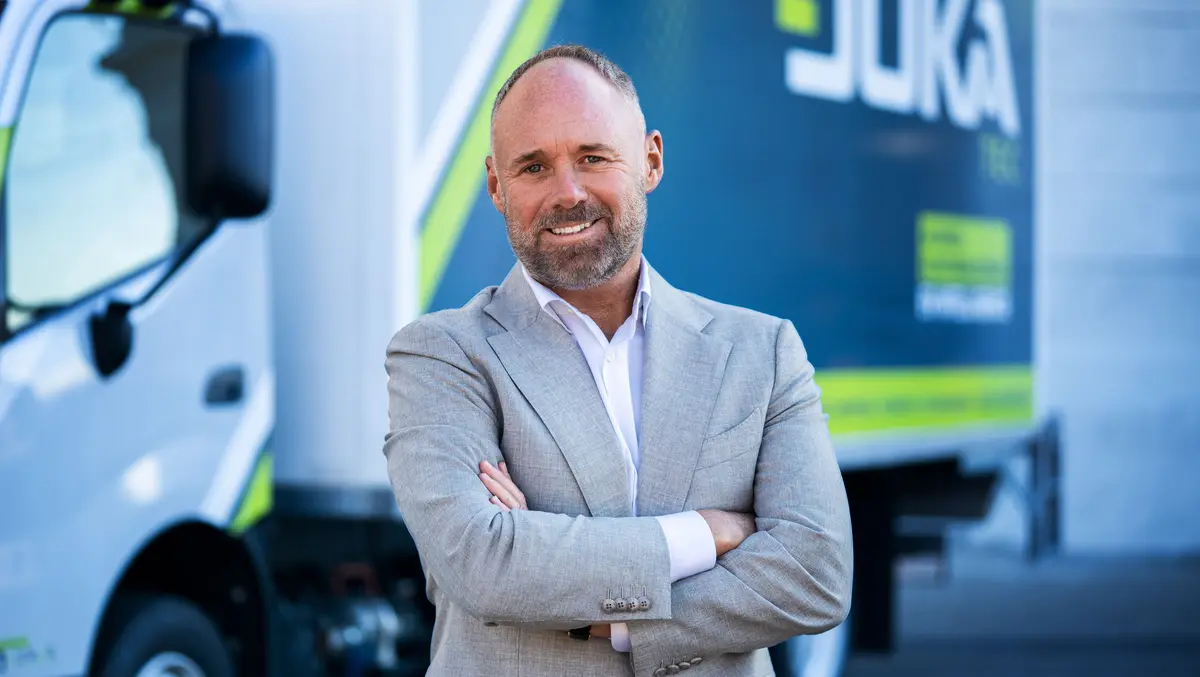
DUKA Tec seeks AUD $10 million to expand electric trucks
Wed, 25th Nov 2026 (Today)
DUKA Tec is seeking AUD $10 million from investors to expand its electric truck drivetrain and software business. The Melbourne-based company is targeting light and medium-duty freight vehicles used in urban deliveries.
The Australian start-up says its licensing model is designed to help established truck manufacturers electrify existing models without developing their own drivetrains and control systems from scratch. It is focused on what Founder and Chief Executive Officer Tony Fairweather calls the "missing middle" of road freight: delivery trucks ranging from 4.5-tonne vehicles to metropolitan prime movers.
DUKA Tec says its technology can make electric trucks up to 40% more efficient. It also says its platform allows fleet operators to retain control of vehicle data as connected vehicle systems become more widely used.
The fundraising effort follows a series of commercial steps, including agreements with assembly partners in Australia, the US and the UAE, and a service agreement with a major global logistics operator.
In Australia, the company plans to establish electric truck assembly operations in Melbourne. It has also set a goal of electrifying 25% of Australia's new medium-duty trucks by 2034.
Licensing model
Rather than manufacturing complete trucks itself, DUKA Tec is pitching its drivetrain and software to truck makers that already sell into freight fleets. The approach is intended to offer a cheaper, faster route to market for manufacturers that lack the volume or research budget to build electric systems for every model.
Fairweather said the market includes about 250 truck makers and roughly 3,500 models worldwide. Target customers include legacy manufacturers such as Isuzu, Hino and Fuso, as well as fleet operators seeking lower running costs in city freight operations.
"Our technology is light, low cost and efficient, and designed specifically for urban delivery trucks. The reality is many truck makers simply don't have the volumes to justify developing electric drivetrains for every model. We supply the electric drivetrain, the software and the support, and the truck maker sells the truck. It means they can bring their models to market as electric much faster and more cost effectively," said Tony Fairweather, Founder and Chief Executive Officer of DUKA Tec.
Connected systems
Every truck using the system is connected through over-the-air software updates, telematics and predictive maintenance tools based on fleet data, according to DUKA Tec. The software monitors vehicle health, identifies faults before breakdowns and links route planning with wider fleet systems.
That focus on software comes as commercial vehicle operators become more sensitive to who owns and controls operating data. DUKA Tec says its platform is intended to give operators access to connected vehicle features while keeping control of their data.
"The future of electric trucks is connectivity. DUKA Tec-enabled trucks are not only more efficient, but they are also smarter and more secure. We're providing a fully connected solution that drives productivity and safety, and one that fleets can trust," said Fairweather.
Commercial backdrop
The business argues that economics are shifting in favour of electric urban freight vehicles. In trials with a major global logistics operator, DUKA Tec said its trucks delivered a 42% lower cost per kilometre than diesel vehicles.
It also said total cost of ownership breakeven periods are approaching three years in some cases, making electric trucks a commercially viable option for urban delivery fleets. Lower maintenance requirements and route optimisation can also reduce downtime and operating costs, it added.
Fairweather is not new to the sector. He previously founded SEA Electric, which, according to DUKA Tec, placed more than 900 electric trucks on roads across six countries, covering more than 15 million kilometres before the business was acquired.
He described DUKA Tec as a second-generation business built on those lessons, with a stronger emphasis on software and a licensing model rather than a more asset-heavy approach.
"DUKA Tec is generation two. It takes everything we learned at SEA Electric and builds on it with a capital-light licensing model, AI-driven technology and software we've rebuilt from the ground up," said Fairweather.
The new funding would be used to expand work with original equipment manufacturers and assembly partners, add more truck models to the platform, and grow the engineering team, the company said.
"The tipping point has already happened. Electric trucks are cheaper to operate than diesel over the life of the vehicle. Until now, truck makers haven't had the ability to electrify proven models, and this has meant they have increasingly been left behind as the world turns to electric options. DUKA Tec's licensing model and partnerships with assembly plants changes the economics of electrification for the world's truck manufacturers," said Fairweather.